
 LT
LT  RU
RU  EN
EN Packaging and Recycling Automation Solutions: Stable Motion, Reliable Sensing, and Real Process Control
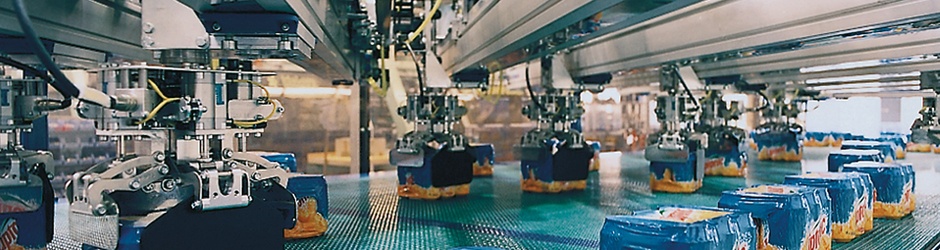
In packaging and recycling industries, the quality of automation directly determines line throughput, material losses, and long-term operating costs. In practice, most problems do not arise from complex technology, but from motion systems working at their limits, insufficient diagnostics, and solutions that were never designed for dusty, contaminated, and highly dynamic real-world environments.
This article presents a practical, engineering-driven approach to designing and upgrading packaging and recycling lines so that they remain predictable, stable, and easy to maintain—not systems that require constant manual intervention after commissioning.
Industrial Problems and Operational Risks
In packaging and recycling lines, failures usually develop gradually but eventually lead to critical downtime. Typical real-world issues include:
- Unstable motion and positioning – drives operate near their limits, causing vibration, impacts, and inconsistent cycle times.
- Jams and mechanical overloads – variable material flow, inconsistent fractions, or mixed waste create unpredictable loads.
- Unreliable detection – dust, contamination, or transparent materials confuse standard sensors.
- Manual problem-solving – operators compensate for instability based on experience rather than data.
- Late diagnostics – faults become visible only once the line has already stopped.
If these issues are not addressed systematically, the consequences are inevitable: unplanned downtime, quality variation, higher energy consumption, safety risks, and financial losses caused by unstable production.
Solution Architecture and Engineering Principles
Effective packaging and recycling automation must be designed from process logic, not from individual components:
Measurement → signal acquisition → control → diagnostics → data for decisions
A critical principle is local autonomy. The line must remain operational even without connection to external IT systems. Data transfer is used for analysis and optimization—not as a prerequisite for stable operation.
Typical Architecture for Packaging and Recycling Lines
- Motion: servo motors and electromechanical actuators providing real-time control of speed, position, and torque.
- Mechanics: linear actuators, screws, and guides selected for actual loads, duty cycles, and contamination levels.
- Sensing: position, presence, speed, temperature, and load sensors.
- Control: PLC-based control with clearly defined machine states and alarm logic.
- Diagnostics: torque, current, cycle time, and jam-detection trends.
- Safety: integrated safety functions without bypass modes during operation.
Key Engineering Features and Advantages
- Stable and repeatable motion – essential for cutting, dosing, sorting, and packaging operations.
- Real load visibility – early detection of jams, wear, and mechanical issues.
- Modular system design – easy adaptation to new products, packaging formats, or material fractions.
- Data-driven diagnostics – decisions based on measurements, not operator intuition.
- Lower lifecycle cost – fewer emergency repairs and unplanned shutdowns.
Engineering Parameters and Practical Constraints
| Parameter | Typical Values | Why It Matters |
|---|---|---|
| Position accuracy | ±0.05…0.1 mm | Repeatable packaging and dosing |
| Response time | <10 ms | Fast lines and early jam detection |
| Protection rating | IP54–IP67 | Dust, moisture, cleaning conditions |
| Signals | DI/DO, 4–20 mA, 0–10 V, Modbus TCP/RTU | Standard PLC integration |
Practical Field Notes
- Mounting: install drives and sensors to minimize dust accumulation and material buildup.
- Cabling: route signal cables separately from motor power lines to avoid EMC-related false alarms.
- Calibration: review limits and recipes whenever material type or fraction changes.
Typical Applications
- Packaging lines – dosing, cutting, sealing, and palletizing.
- Waste sorting systems – fast reaction to changing material flow.
- Recycling equipment – shredders, conveyors, balers, and presses.
- Material handling systems – controlled and safe product transport.
Integration, Commissioning, and Maintenance Notes
Integration is typically performed via PLC with optional HMI or SCADA. A structured commissioning process includes:
- Process and risk analysis.
- Selection of motion, sensing, and safety components.
- Configuration of limits, alarms, and diagnostics.
- Testing under real load conditions.
- Training of operators and maintenance personnel.
Common mistakes include excessive speed without diagnostics, incorrect sensor selection for dusty environments, and ignoring long-term trend data.
Why This Solution Is Chosen Over Alternatives
Minimal or fragmented automation may work temporarily but fails under real operating conditions. An engineering-driven solution is preferred because it delivers:
- Predictable operation with fewer surprises.
- Improved safety through controlled motion and clear system states.
- Higher throughput with reduced downtime.
- Long-term value through lower operating costs.
Frequently Asked Questions
Is this solution suitable for very dusty environments?
Yes. Components are selected with appropriate IP protection and mounting strategy.
Can existing lines be modernized?
Yes. In many cases, modernization delivers a fast return on investment.
Does the system work without internet access?
Yes. All critical control and safety logic operates locally.
What is the main benefit of this approach?
Reduced downtime, stable quality, and transparent diagnostics.
Conclusion / Call to Action
In packaging and recycling, the best solutions are designed for reality—not for ideal conditions. Stable motion, reliable sensing, and clear diagnostics reduce operational risk and increase line efficiency.
Inobalt acts as a long-term engineering partner—from analysis and system design to integration, commissioning, and ongoing support—using proven solutions from Thomson Linear, Kollmorgen, ReeR, DI SORIC, Contrinex, CS Instruments, Akytec, Optris and other trusted manufacturers.
If you are planning a new packaging or recycling line—or need to stabilize an existing one—contact Inobalt for a technical consultation.